- Dharmo Care Labs Pvt. Ltd.
Manufacturers and Suppliers of Quality pharma Injections and Dry Syrups all over India

Licences Required for an Injection Pharma Franchise in India (2026 Checklist)

Featured Snippet Box
An injection pharma franchise in India generally needs a wholesale drug licence from the state drug control authority (Form 20B, or Form 21B for Schedule C and C(1) products), a GST registration, suitable premises with proper storage, and a qualified competent person. A manufacturing licence is not needed if the business only distributes finished products.
Licences Required for an Injection Pharma Franchise Business in India
Most people who ask about an injection pharma franchise want to know whether a drug licence is enough. Usually the answer is yes, plus a GST registration, proper storage and clean paperwork. The exact combination depends on your state, the products you stock and how your business is registered.
Injectables raise the stakes. They go straight into the body, and a vial that sat in the wrong temperature for a week can be a problem even when it looks fine. Regulators know this, and so should you before you sign a franchise agreement.
This guide covers the licences, who qualifies to supervise your wholesale business, what to ask a manufacturer, and where people usually slip up.
Which licences does an injection pharma franchise need?
Takeaway: An injection pharma franchise must hold a wholesale drug licence issued by the State Licensing Authority. GST registration, compliant premises and manufacturer documents come on top of that.
Selling or distributing medicines wholesale without a licence isn’t allowed under the Drugs and Cosmetics Act, 1940 and the Rules made under it. The licence is issued by your state’s drug control department, not by the franchise company.
In practice, the essentials for a distribution-only franchise are:
- A wholesale drug licence (Form 20B and/or Form 21B)
- GST registration, where applicable
- Premises that meet the state’s area and storage norms
- A competent person named on the licence
- Verified documents from the manufacturer you’re buying from
Form 20B or Form 21B: which one applies?
Takeaway: Form 20B covers most allopathic drugs. Form 21B applies to Schedule C and C(1) products such as biologicals. Schedule X drugs need a separate licence.
Form 20B is the wholesale licence for drugs other than those in Schedules C, C(1) and X, Form 21B covers Schedules C and C(1), and Schedule X drugs need Form 20G. You apply on Form 19, and the forms are issued under Rule 64 of the Drugs Rules, 1945. pharmafranchisehelp
| Licence | Covers | Typical relevance to injectables |
|---|---|---|
| Form 20B | Wholesale of drugs other than Schedule C, C(1) and X | Most general injectables, including many antibiotic vials |
| Form 21B | Wholesale of Schedule C and C(1) drugs | Biological and special products, often cold-chain |
| Form 20G | Wholesale of Schedule X drugs | Restricted products, only if you deal in them |
Here’s the point many articles skip. Whether you need 21B depends on the product’s schedule, not on the fact that it’s an injection. A franchise that only handles dry-powder antibiotic vials may find Form 20B is the relevant licence. A franchise that adds insulin or vaccines will likely need 21B as well. Confirm each product’s classification with the licensing authority before you buy premises or refrigeration equipment.
Who counts as a competent person?
Takeaway: A wholesale drug licence requires a competent person, and under Rule 64 that can be a registered pharmacist, a graduate with one year of drug-sale experience, or a matriculate with four years.
Rule 64 lets wholesale trade be run by a registered pharmacist, a graduate with one year of experience in selling drugs, or a matriculate with four years of experience. That person has to actually supervise the business, not just lend a certificate. Inspectors do check this. pharmacy180
The rule may tighten. The Drugs Technical Advisory Board has recommended, again, that a registered pharmacist be the required competent person for Form 20B and 21B licences, though this only takes effect if the government notifies the amendment. If you’re planning ahead, hiring a registered pharmacist from day one is the safer bet. pharmatutor
Is GST registration compulsory?
Takeaway: GST registration is required once your turnover crosses the applicable threshold, and most franchise distributors register anyway because manufacturers and buyers expect GST-compliant invoices.
Registration lets you issue tax invoices, claim input tax credit and file returns properly. Thresholds and exemptions vary with turnover, the type of supply and the state, so check the current rules on the GST portal or with a tax professional instead of relying on a blog post, including this one.
Do you need a manufacturing licence?
Takeaway: No. A distribution-only franchise buys finished injectables from a licensed manufacturer and does not need a manufacturing licence.
A manufacturing licence becomes relevant only if you make the products yourself, or if you’re the brand owner using contract manufacturing. In that case the manufacturing partner’s licence and your agreement with them both matter.
An FSSAI licence is a separate matter. It covers food products, not pharmaceutical injections. It applies only if you also distribute food or nutraceutical items.
Storage and premises for injectables
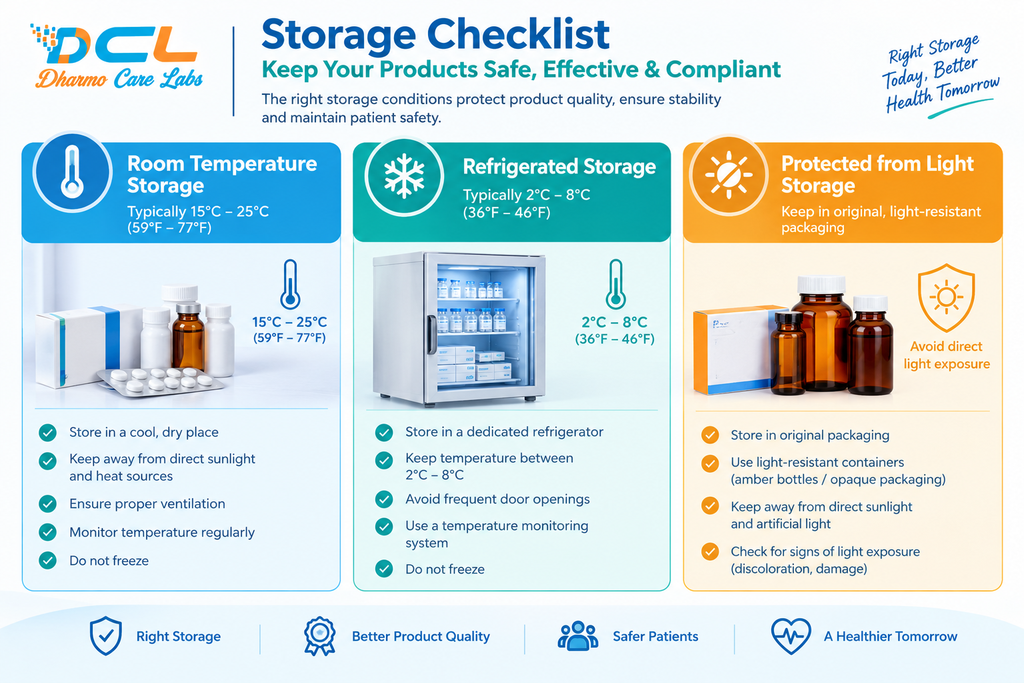
Takeaway: Injectable medicines must be stored exactly as their labels say, which may mean a controlled room temperature, refrigeration and temperature monitoring.
Some vials only need a cool, dry, dark shelf. Others need a refrigerator. The approved label and the manufacturer’s instructions are the final word, not a general rule of thumb.
Good practice for injectable stock includes:
- Keeping cold-chain products in refrigeration with a working thermometer
- Rotating stock by expiry date, first-expiry-first-out
- Tracking batch numbers on every purchase and sale
- Using suitable transport for deliveries
- Keeping purchase and sales records ready for inspection
Many injectable antibiotics fall under Schedule H or H1, which carry their own record-keeping and sale rules. Ask your licensing authority what applies to your product list.

How to verify the manufacturer before you sign
Takeaway: Before joining an injection PCD company, ask to see its manufacturing licence, product approvals, batch and expiry details and quality documents.
You depend on the manufacturer’s compliance more than you might think. If their licence has lapsed or a product isn’t approved, your stock becomes your problem.
Ask for:
- Manufacturing licence details for the specific products
- Product approvals or applicable regulatory documents
- Company registration and GST details
- Label and product information
- Quality certificates, if the company claims any
- Batch, expiry and supply documentation
Take this step for every company, big or small. Dharmo Care Labs Pvt. Ltd. is one such manufacturer and supplier. Its website lists injections and dry syrups in its portfolio, and the company also offers third-party manufacturing. Its listed address is Plot No. 12-24, Industrial Area, Barotiwala, District Solan, Himachal Pradesh. If you’re comparing injection franchise partners, request the licence and product documents from Dharmo Care Labs Pvt. Ltd. and from every other company on your list, and compare them side by side. dharmocaredharmocare
Documents checklist
Takeaway: Most state applications ask for identity, business, premises, storage and competent-person documents, and a missing item is the most common reason for delay.
- PAN and identity/address proof
- Business registration documents (firm, LLP or company)
- GST registration
- Premises ownership or rent agreement
- Competent person or registered pharmacist details and qualification proof
- Storage facility details, including refrigeration if needed
- Bank account details and cancelled cheque
- Franchise agreement and manufacturer documents
States differ in what they ask for and how they want it filed. Confirm the current list with your state drug control department before you pay for anything.
A realistic scenario (illustrative only)
Suppose a distributor plans to stock antibiotic injection vials. They rent premises, appoint a registered pharmacist, apply for Form 20B and register for GST. Six months later a partner company offers an insulin-type product. That product is a biological, so the distributor needs to check whether Form 21B and refrigeration are now required. The lesson is simple: a licence is tied to the categories you handle, so adding a product line can mean adding a licence.
Key Takeaways
- A wholesale drug licence (Form 20B, and Form 21B for Schedule C/C(1)) is the core licence for an injection pharma franchise.
- The licence comes from the state drug control authority, not the franchise company.
- A competent person must supervise the business, and a registered pharmacist is the safest choice.
- GST registration depends on turnover and state rules, though most distributors register anyway.
- A distribution-only franchise doesn’t need a manufacturing licence.
- Verify every manufacturer’s licence and product papers before signing.
- Rules vary by state and product, so always confirm with the licensing authority.
FAQs
1. Which licence is required for an injection pharma franchise?
A wholesale drug licence, usually Form 20B, and Form 21B too if you deal in Schedule C or C(1) products.
2. Who issues the drug licence?
The State Licensing Authority under the state drug control department.
3. Do I need GST registration?
It depends on your turnover and the GST rules for your state and type of supply. Most franchise distributors register anyway.
4. Do I need a manufacturing licence?
No, not if you only distribute finished products from a licensed manufacturer.
5. Can I sell injections without a drug licence?
No. Wholesale sale or distribution of medicines requires a valid licence.
6. Do I need a registered pharmacist?
Rule 64 currently allows other competent persons with the prescribed experience too. A registered pharmacist is the safest choice, especially as the rule may tighten.
7. Can I run the franchise from a rented shop?
Yes, if the premises meet the state’s area and storage requirements and you hold a valid lease.
8. Do all injections need refrigeration?
No. Storage depends on each product’s label, and some need controlled room temperature while others need refrigeration.
9. What should I do before signing with a franchise company?
Check its manufacturing licence, product approvals, batch and expiry information and quality documents, and compare more than one company.
10. What is the next step after getting the licence?
Set up compliant storage, stock only from verified manufacturers, keep batch-wise records and file your GST returns on time.
This article is for general information and is not legal advice. Confirm current requirements with your state drug control department.
Author Box
Dharmo Care Labs Pvt. Ltd. is a pharmaceutical manufacturer and supplier based in Barotiwala, Baddi (Himachal Pradesh). According to its website, its portfolio includes injections and dry syrups, and it offers third-party manufacturing.